Snake Tongs,
built from a bicycle.
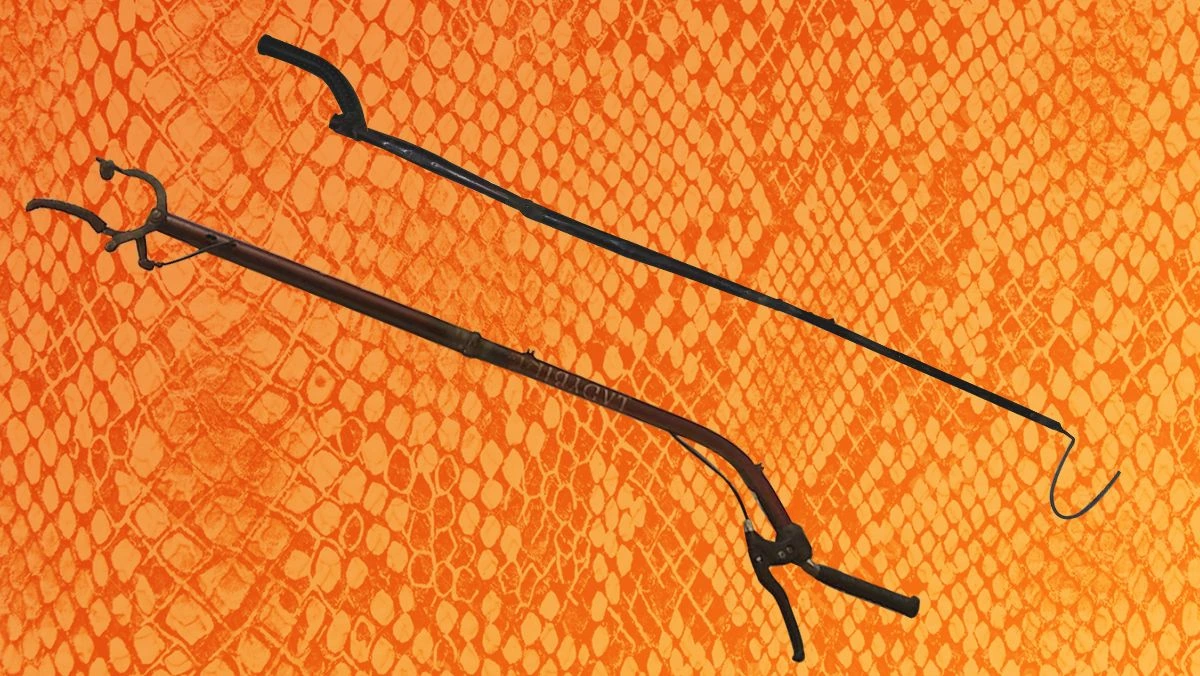
A hands-on exercise in reuse — turning salvaged bicycle parts into a working tool for handling snakes at a safe distance.
Overview
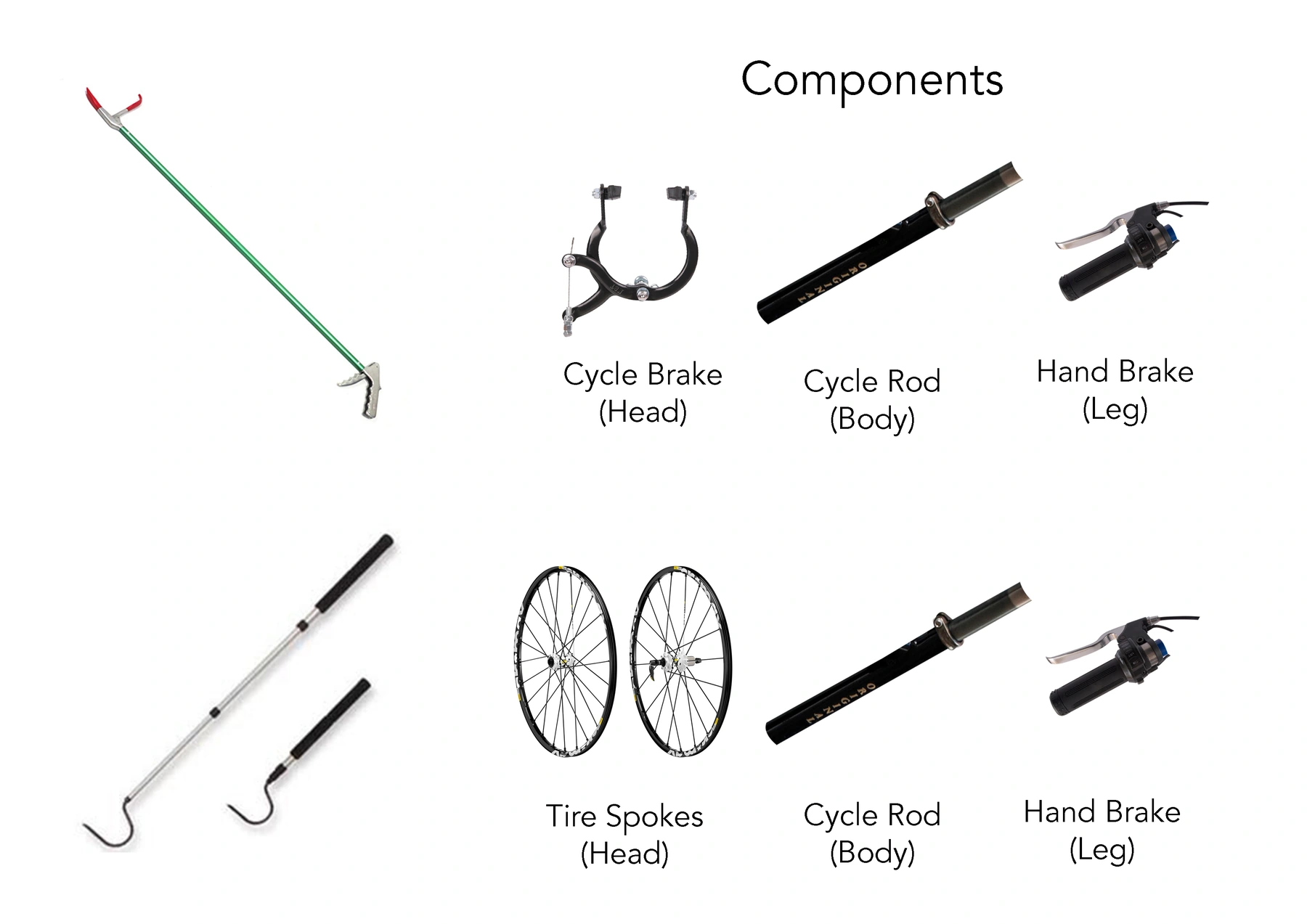
The brief was deliberately constrained: design a product made entirely from bicycle spare parts. Studying the bicycle component by component, the braking system stood out — a lever, a cable and a caliper already form a mechanism that closes a grip at a distance from the hand operating it.
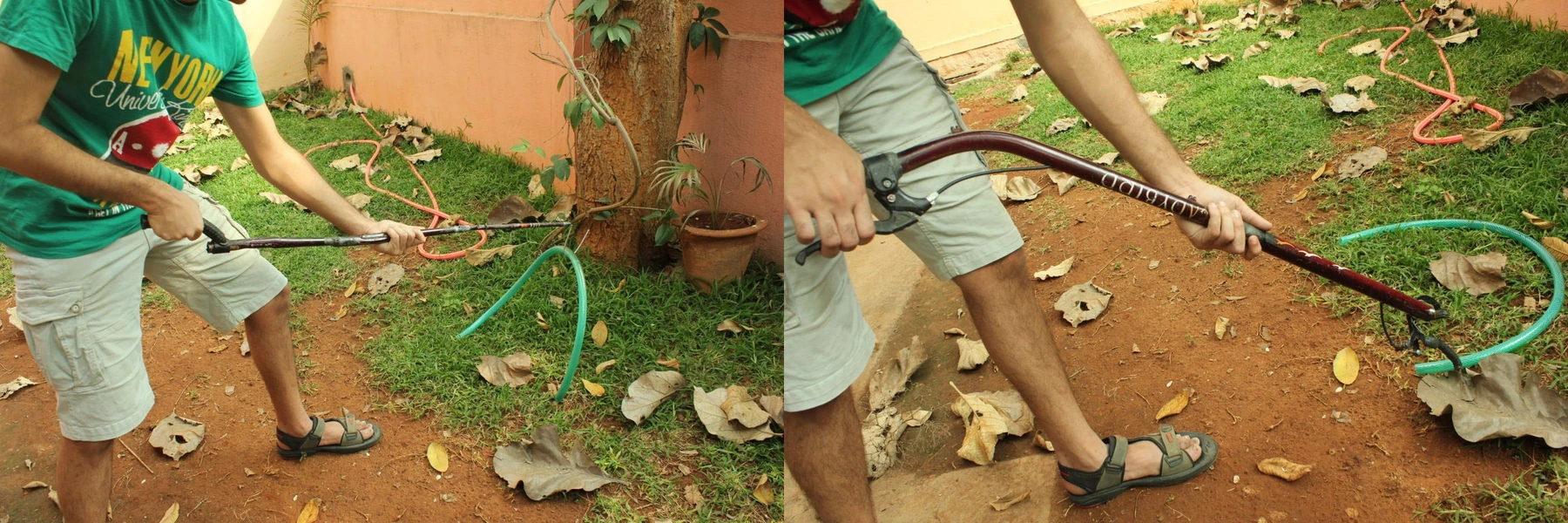
That mechanism suggested its own application. The result is a pair of snake tongs: a tool that lets a handler grip and relocate a snake without putting a hand anywhere near it.
Exploration
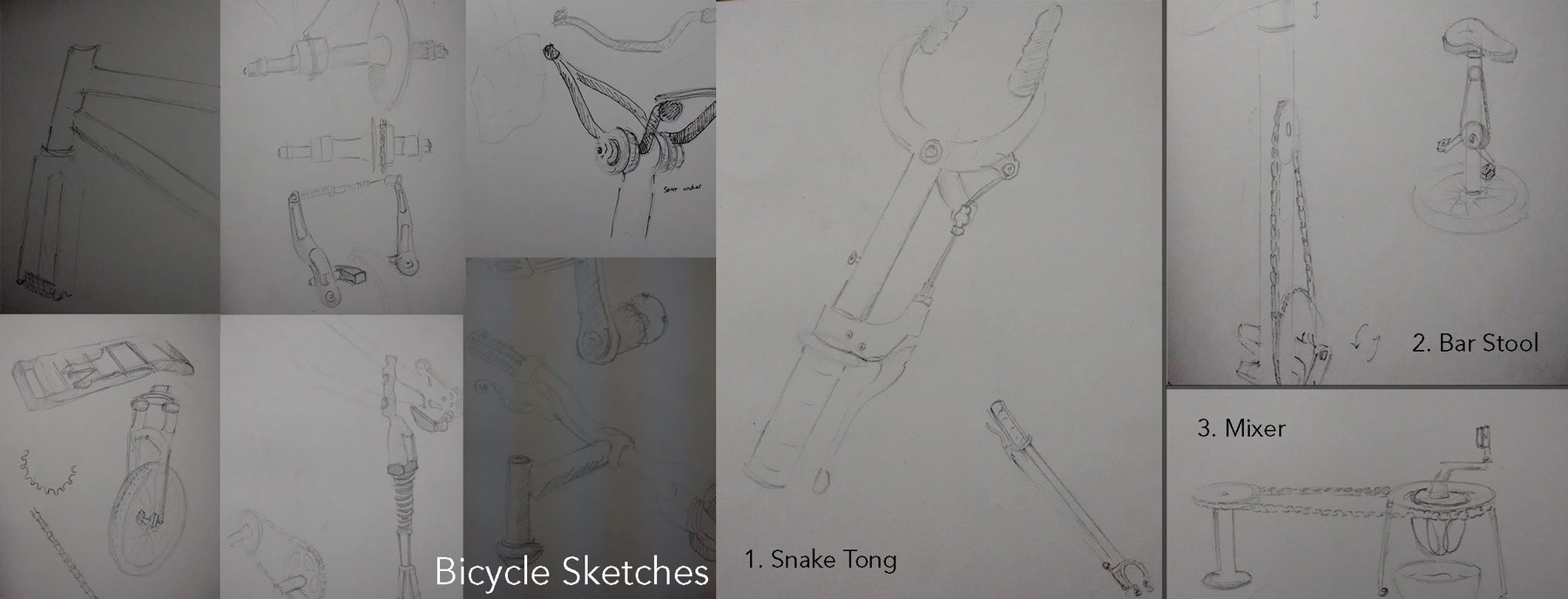
I began by sketching the bicycle to understand its form and materials. Drawing it forced me to notice components I would otherwise have overlooked, and gave me a working inventory of shapes to build from.
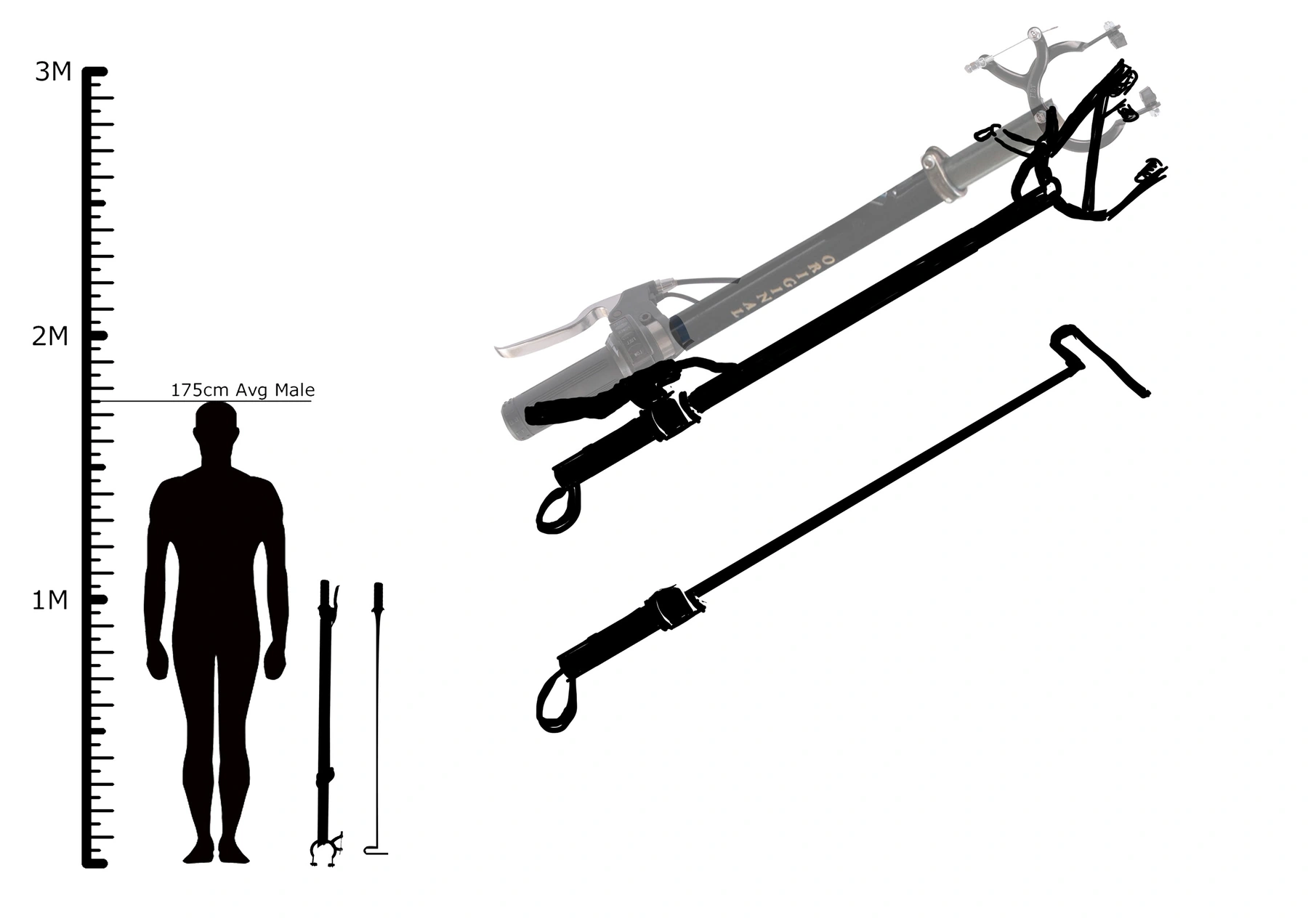
Making
With the design settled, the build began with sourcing. I worked through scrap yards across Bangalore to find frames, calipers and levers in usable condition.
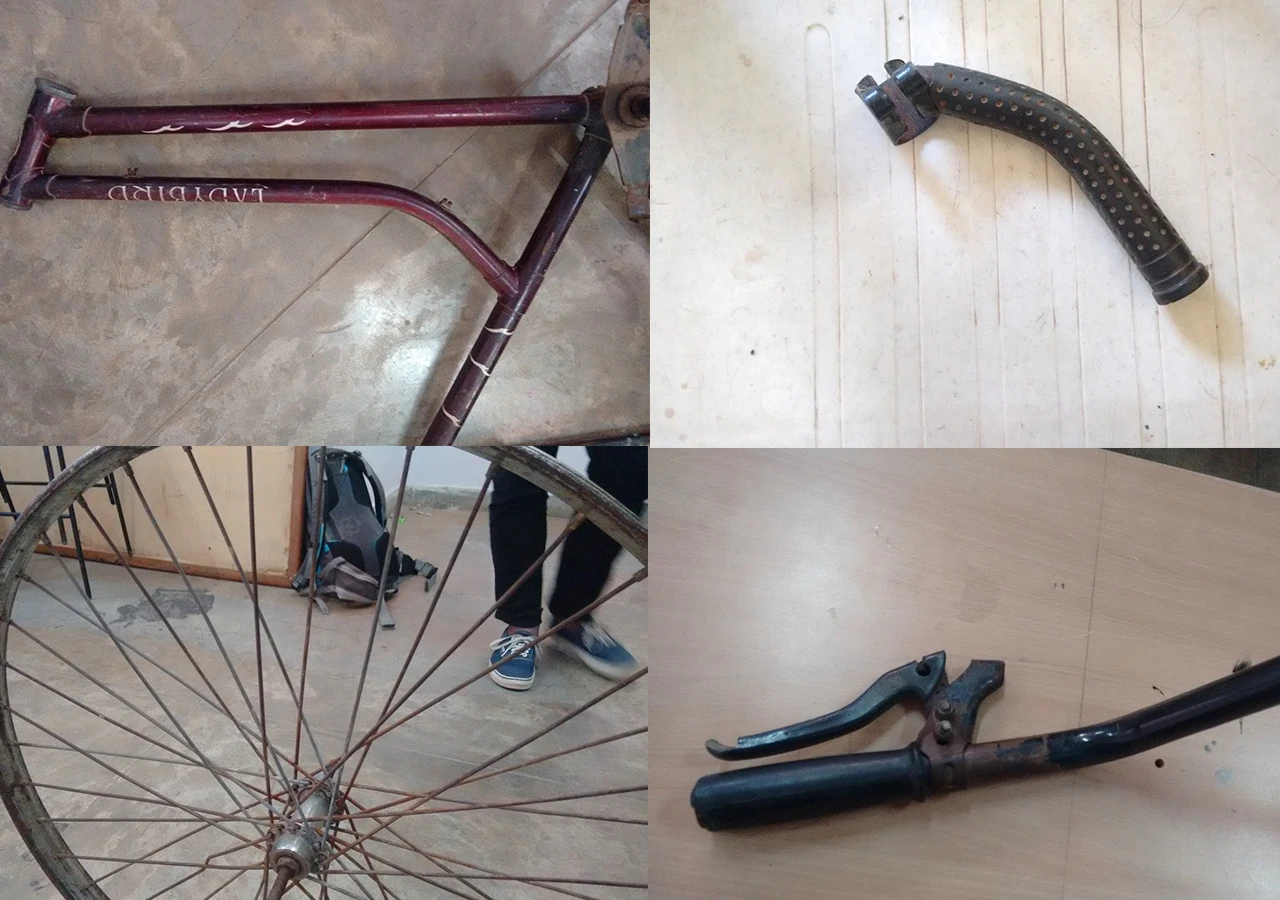
Reversing the brake
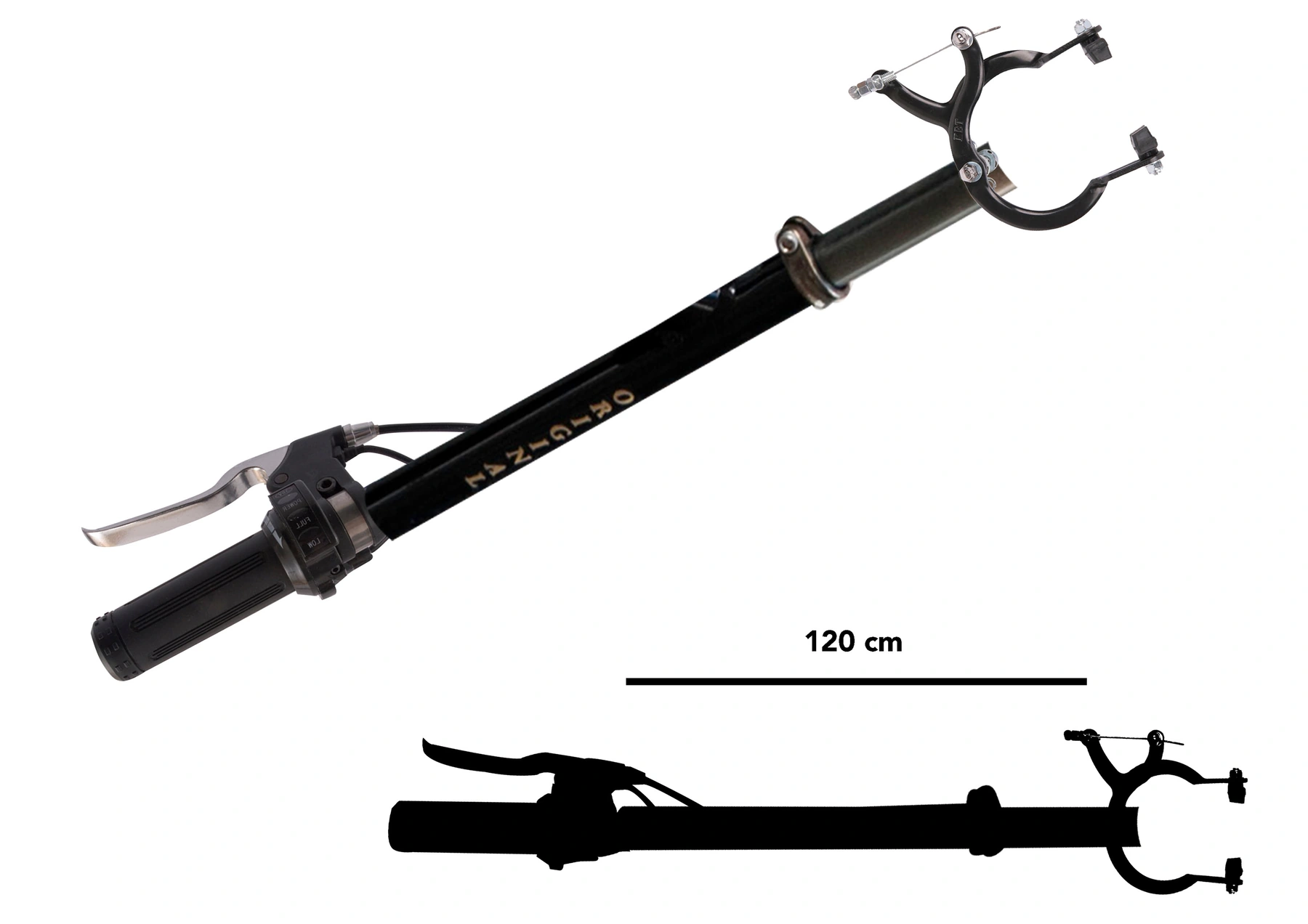
A bicycle brake closes onto a rim; a tong needs to close onto a snake. I modified the mechanism so the arms met when the lever was squeezed, gas welded the hand brakes to the caliper bracket to form the clamp, then arc welded the remaining assembly together.
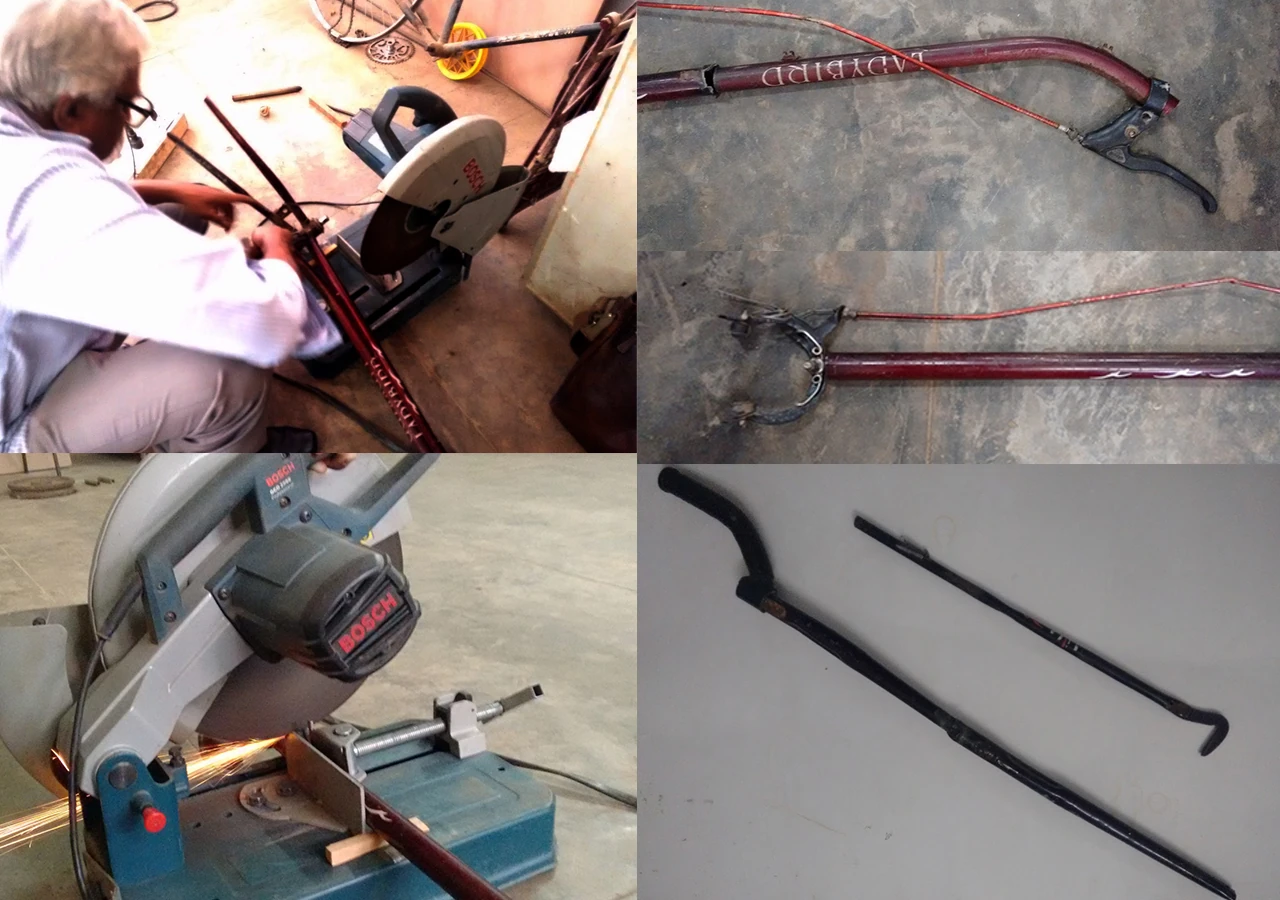
Protecting the cable, improving the grip
The brake cable was routed inside the shaft so it could not be snagged or pulled in use, and salvaged inner tube was wrapped around the handle to give a firm, weather-resistant grip.
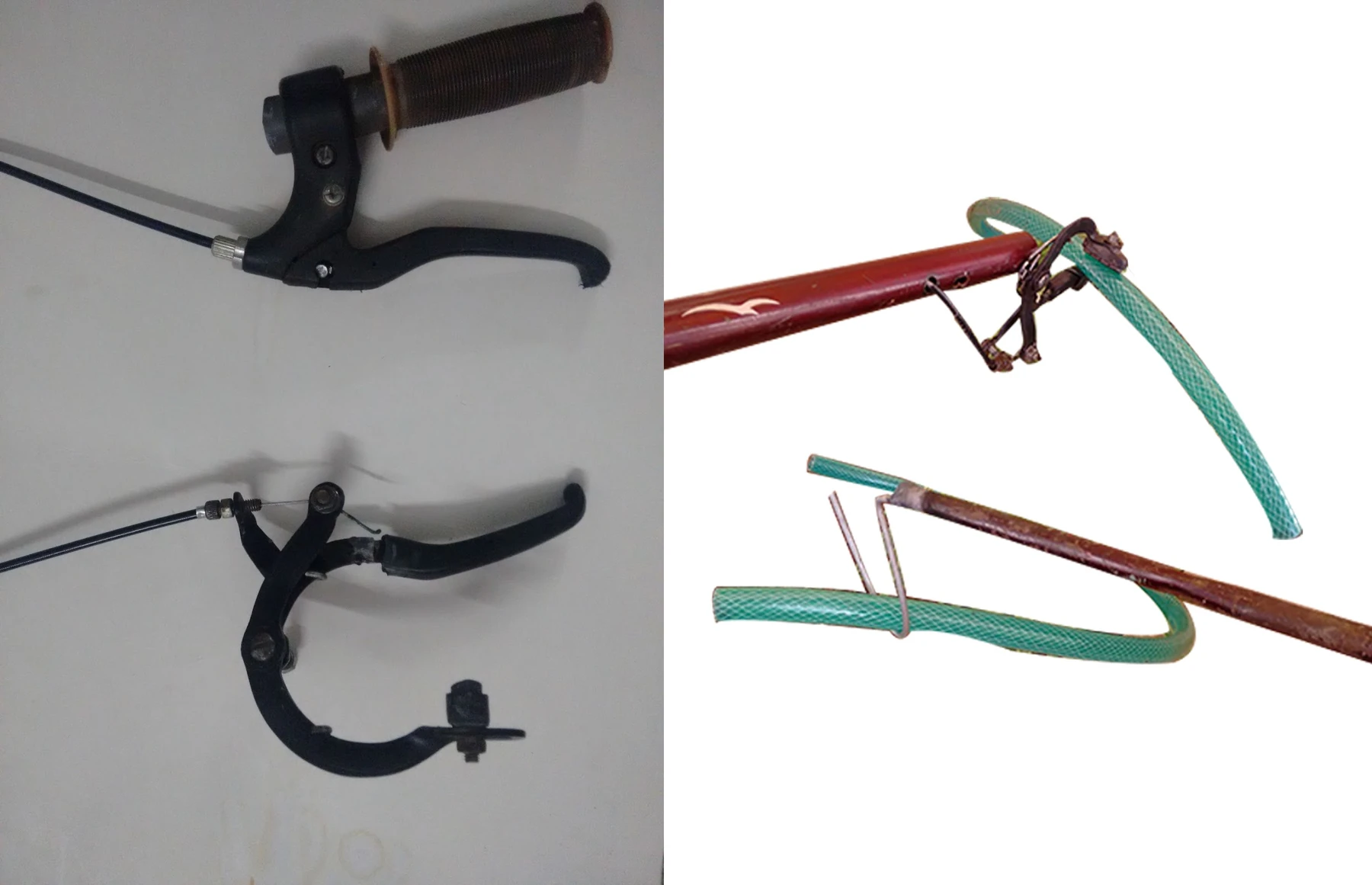
Testing
The tools were tested outdoors against dummy snakes. Users unfamiliar with the design were able to capture and relocate between three and six of them within a minute — enough to confirm the mechanism worked under realistic handling.
Takeaways
- Constraints are a brief in disguise — limiting the material palette to one bicycle forced sharper decisions than an open brief would have.
- Existing mechanisms carry their own ideas; the brake already solved “close a grip from a distance” before I designed anything.
- Building the thing surfaced problems no drawing did — cable routing and grip only became design decisions once it was in hand.